When Lagos Meets Lower Broad: How Nashville Became the World's Unlikely Remix Studio
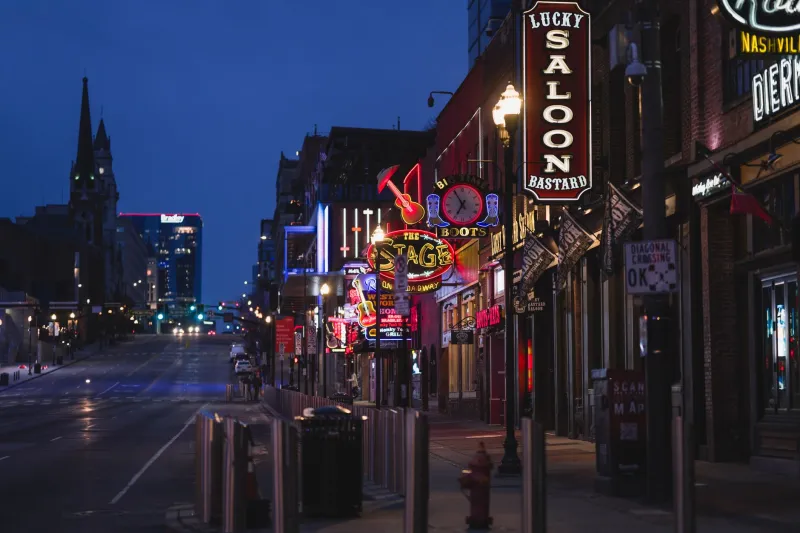
For most of its history, Nashville's relationship with the rest of the world was pretty straightforward: the city made the music, and everybody else bought it. The "Nashville Sound" — that polished, string-sweetened country-pop formula that emerged in the late '50s — was practically a cultural export strategy. Chet Atkins and Owen Bradley didn't just make records. They built a brand.
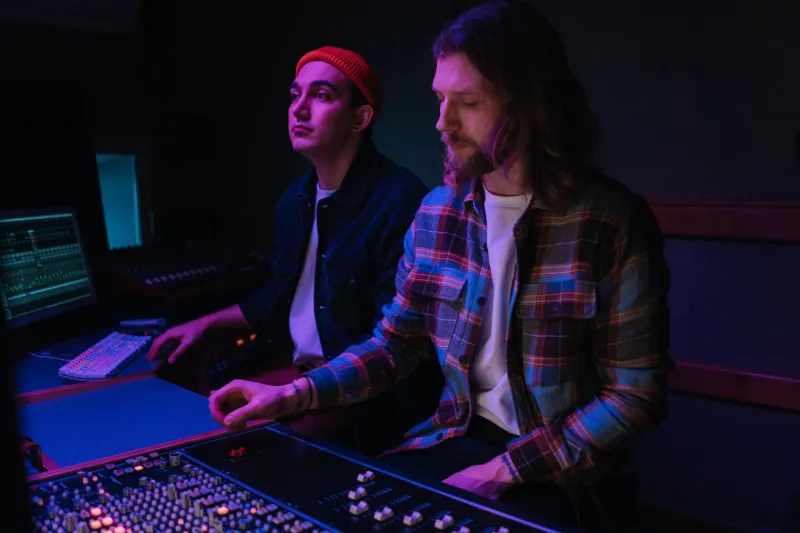
But spend a few days walking through the studio corridors of Berry Hill, East Nashville, and Germantown right now, and you'll notice something has fundamentally shifted. The accents in the control rooms aren't all Southern anymore. The reference tracks being pulled up on ProTools aren't all country. And the conversations happening between artists and producers sound less like "Nashville" and more like the United Nations — if the UN ran on cold brew and vintage Neve consoles.
Nashville didn't just go global. The global came back.
The Flip Script
Producer Marcus Olusegun moved from Lagos to Nashville four years ago, drawn initially by the city's reputation for world-class session musicians and affordable studio time compared to Los Angeles or New York. What he found surprised him.
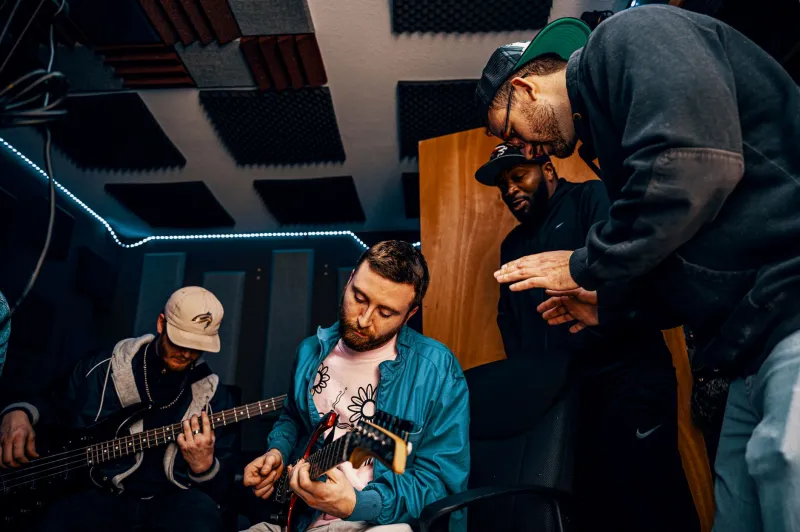
"I thought I was coming to learn from Nashville," he says, leaning back in his chair at his studio space just off Nolensville Pike. "And I did. But what I didn't expect was that Nashville was genuinely curious about what I was bringing. These musicians — guys who've played on a thousand country records — they'd hear me loop an Afrobeats rhythm and their eyes would light up. They wanted to figure it out."
That mutual curiosity has become something of a defining characteristic of the city's current creative moment. Where the old Nashville Sound was about smoothing out the rough edges of regional American music into something universally palatable, the new thing happening here is almost the opposite — it's about introducing friction, texture, and unfamiliar rhythmic vocabulary into sessions and seeing what sticks.
The results are genuinely hard to categorize, which, depending on who you ask, is either the whole point or the whole problem.
Seoul to the Songwriting Room
Ji-Yeon Park arrived in Nashville from Seoul three years ago on a songwriting residency and never quite left. She's quick to point out that the K-pop industry has had a quiet relationship with Nashville's publishing infrastructure for longer than most people realize — melody-forward pop songwriting is a skill set that translates across languages, and Music Row has been quietly licensing and co-writing for Korean labels for years.
But Ji-Yeon's work is something different. She's not writing for the K-pop machine. She's folding the production aesthetics she grew up with — the meticulous layering, the vocal processing, the way tension and release work differently in Korean pop structure — into Americana-adjacent music that feels genuinely hybrid rather than just genre-blended.
"People here kept asking me, 'What genre is this?'" she laughs. "And I kept saying, I don't know, does it matter? It sounds like how I feel living between two places. That's the genre."
Her EP, recorded almost entirely with Nashville session players and released quietly on Bandcamp last spring, has quietly built a following that spans country music forums and K-indie blogs — two communities that have never had much reason to overlap before.
The Enrichment Question
Not everyone in Nashville is uncritically celebrating this influx. It's worth being honest about the tension that exists alongside the excitement.
Some longtime Music Row veterans — the kind of people who've spent careers understanding exactly what makes a Nashville record feel like a Nashville record — are watching these shifts with a mix of fascination and unease. The concern isn't xenophobic; it's more existential. If Nashville becomes a genre-agnostic global recording hub where anything goes, does it lose the specific gravity that made it worth coming to in the first place?
It's a fair question. And it doesn't have a clean answer.
What the skeptics and the enthusiasts tend to agree on, though, is that Nashville's real superpower has never been any single sound. It's been the infrastructure — the musicians, the engineers, the rooms, the culture of collaboration — that allows sounds to be realized at an exceptionally high level. That infrastructure doesn't disappear just because the inputs are changing.
"Nashville has always absorbed outside influence and made it its own," says longtime session guitarist and producer Ray Delacroix, who's worked on records ranging from classic country to hip-hop to gospel over a 30-year career. "Rock and roll, R&B, pop — all of it came through here at some point and got the Nashville treatment. This is just the next version of that story."
São Paulo in the Tracking Room
Brazilian singer and multi-instrumentalist Camila Ferraz would probably agree with Delacroix, though she'd frame it differently. She came to Nashville specifically because she wanted her music to be roughed up a little — taken out of the pristine, digital-forward production world she'd grown up in and given something rawer.
"In São Paulo, everything is very produced, very clean," she explains. "I wanted live drums that breathe. I wanted a room sound. Nashville gave me that, but then the musicians here started responding to my rhythms, my harmonies, and something happened that neither of us planned."
The track she's describing — a slow-burn thing that opens with what sounds unmistakably like a Brazilian baião rhythm before a pedal steel enters and completely reframes the emotional landscape — is the kind of music that makes you stop whatever you're doing. It doesn't sound like a fusion experiment. It sounds like a place. A specific, imaginary place that didn't exist before these particular people sat down together in a room on a Tuesday afternoon in East Nashville.
What Nashville Becomes
The city has always been a destination — for dreamers, for hustlers, for people who believed that the right combination of talent and geography could change their lives. What's shifting now is the geography of the dreamers themselves. They're coming from further away, carrying different musical memories, different rhythmic instincts, different ideas about what a song is supposed to do to a listener.
And Nashville, being Nashville, is doing what it's always done: putting them in rooms together, pointing at the microphone, and seeing what happens.
Whether you call that enrichment or dilution probably says more about your relationship to change than it does about the music. But walk into the right studio on the right night right now, and you'll hear something that feels like the future being worked out in real time — one cross-cultural session at a time.
Pangaea, after all, is the name for the time when all the world's landmasses were one. Nashville, in its own chaotic, beautiful, slightly accidental way, might be building a musical version of that. And honestly? It sounds pretty good.