Selling the Soul You Came Here to Find: Nashville's Authenticity Crisis in the Age of Algorithms
There's a moment every transplant musician describes, usually sometime in their first year in Nashville. They're sitting in on a writers' round at some mid-size venue on a Tuesday night, nursing a cheap beer, and something happens onstage that stops them cold. A lyric lands differently. A melody does something unexpected. They think: this is why I came here.
That moment still happens. The question a lot of people are starting to ask — quietly, carefully, because Nashville doesn't love self-doubt — is how much longer it will.
The City That Ate Itself (Lovingly)
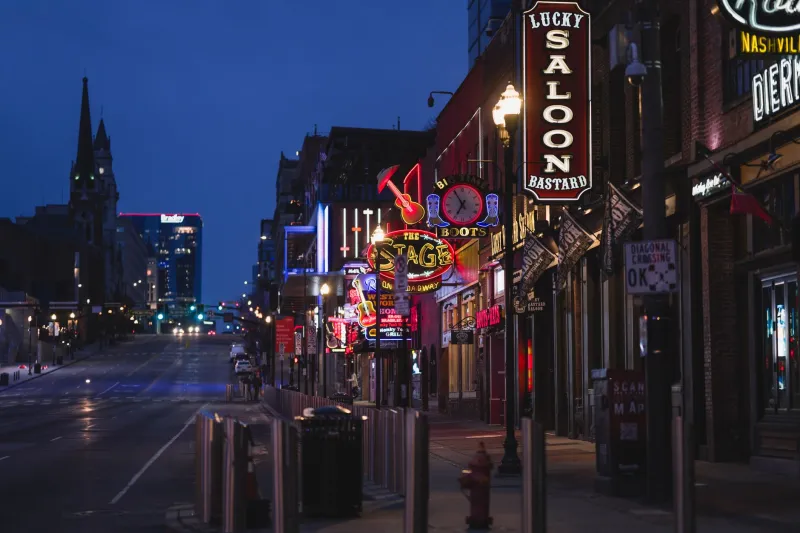
Nashville's growth story is by now well-documented. The bachelorette parties. The rooftop bars. The $18 cocktails served in venues that look like they were designed by an algorithm trained on Instagram posts about Nashville. The city's tourism industry pulled in over $8 billion in 2023, and Broadway — that famous strip of honky-tonks — has become less a music destination than a theme park with a live band soundtrack.
None of that is inherently evil. People want to come here, and that's a testament to something real the city built over generations. But the sheer economic gravity of the tourism machine has started warping the creative ecosystem around it, in ways that are subtle enough to be easy to dismiss and serious enough that a lot of working musicians aren't dismissing them anymore.
"There are now two Nashvilles operating in parallel," says one veteran session guitarist who asked not to be named because, as he put it, 'I still need to work here.' "There's the Nashville that exists to be photographed and consumed, and there's the Nashville where actual music gets made. The problem is that the first one is starting to eat the resources — the venues, the rooms, the attention — that the second one needs to survive."
What the Algorithm Wants
If the tourism economy is one pressure, the streaming economy is another — and in some ways it's harder to push back against because it's invisible.
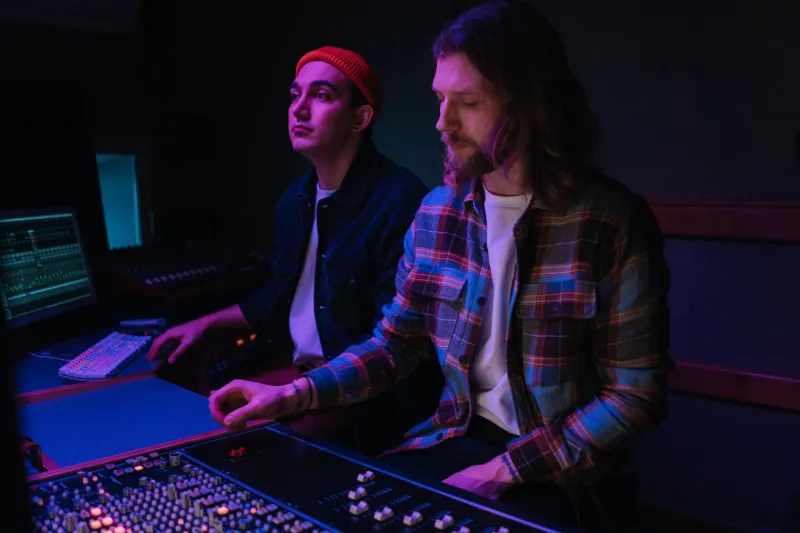
Producers across the city describe a creeping shift in how projects get greenlighted and shaped. Data from Spotify, Apple Music, and TikTok doesn't just inform marketing decisions anymore; it informs creative ones. Songs are being structured around what the algorithm rewards: quick hooks, predictable emotional arcs, tempos that test well in the first fifteen seconds. The result isn't necessarily bad music. But it's music built to a spec, and that spec has very little room for the kind of left-field choices that made Nashville's output interesting in the first place.
"I had a label conversation last year where they literally pulled up a Spotify data dashboard during the A&R meeting," says one independent producer who works across country, Americana, and R&B projects. "They wanted to talk about what the skip rate looked like on a competitor's record. That's the conversation now. Not 'does this feel true,' but 'does this test well.'"
The irony is that Nashville built its reputation on emotional honesty — on songs that said the hard, specific, unglamorous thing. The algorithm rewards the opposite: the broadly relatable, the emotionally safe, the thing that offends nobody and moves everyone. Those two value systems are not easily reconciled.
The Venue Problem
It's not just the music itself. The physical spaces where Nashville's creative culture lives — or lived — are under their own set of pressures.
Real estate values across the city have made it genuinely difficult for independent venues to survive. Several beloved smaller rooms have closed in the past three years, replaced by larger, more commercially oriented spaces designed to capture the tourist dollar. The venues that remain independent are often doing so on the thinnest of margins, programming carefully to balance the artistic credibility their regulars expect with the revenue they need to keep the lights on.
"We make decisions every week that feel like Sophie's Choice," admits the booker at one East Nashville venue who agreed to speak on background. "Do we book the challenging act that our core audience will love and that might lose us money, or do we book the thing that fills seats? We try to do both. But the pressure tilts one way."
The result is a slow, hard-to-quantify shift in what gets programmed and who gets a platform. Emerging artists who are doing something genuinely new — something that doesn't fit neatly into a marketable genre category or a tourism-friendly aesthetic — find fewer places to develop their craft in front of a live audience. That's not a crisis you can point to on a map. But it accumulates.
The Believers
Here's the thing, though: Nashville has always had skeptics, and Nashville has always proven them at least partially wrong.
There's a counter-narrative running through all of this, and it's not naive. Plenty of artists and producers working here right now are doing genuinely exciting, commercially uncompromised work — often precisely because the city's infrastructure, even in its more commercialized form, gives them access to collaborators and tools they couldn't find anywhere else. The session musician culture, the co-writing tradition, the sheer density of skilled craftspeople — those things haven't disappeared. They've arguably gotten stronger.
"People have been writing Nashville's creative obituary since at least the '90s," points out one Americana singer-songwriter who's been based here for fifteen years. "The city has a way of metabolizing commercial pressure and spitting out something interesting on the other side. I'm not ready to give up on that."
And there are genuine pockets of resistance. The underground venue scene — small, mostly word-of-mouth, deliberately off the tourist radar — is more active than it's been in years. DIY collectives are booking shows in unconventional spaces. Artists are self-releasing work that would have been considered uncommercial by any label standard and finding audiences for it anyway.
What "Real" Even Means Now
Maybe the harder question isn't whether Nashville is losing its authenticity, but whether authenticity was ever as simple as the mythology suggested.
The classic Nashville Sound of the '50s and '60s — lush strings, pop production, crossover ambition — was itself a commercial calculation that purists of the time decried as a sellout. Every era of Music City history has involved tension between art and commerce, between the thing that moves people and the thing that moves units. That tension isn't a bug. It might be the engine.
What feels different now is the scale and speed of the pressure. The tourism economy and the streaming economy aren't new forces, but they're bigger and faster than anything Nashville has navigated before. The city is being asked to be itself and to be a product simultaneously, at a volume that makes it genuinely hard to hear which voice is which.
The artists who are figuring it out — and some of them are — tend to share one quality: they've stopped waiting for permission from the commercial infrastructure to make the thing they actually believe in. They're doing it anyway, in smaller rooms and on self-released records and in sessions that never get pitched to a label. Nashville's soul, if it's anywhere, is probably there.
You just have to know where to look. Which, to be fair, has always been the deal.