Studio City South: How Nashville Became the Genre-Agnostic Recording Capital Nobody Saw Coming
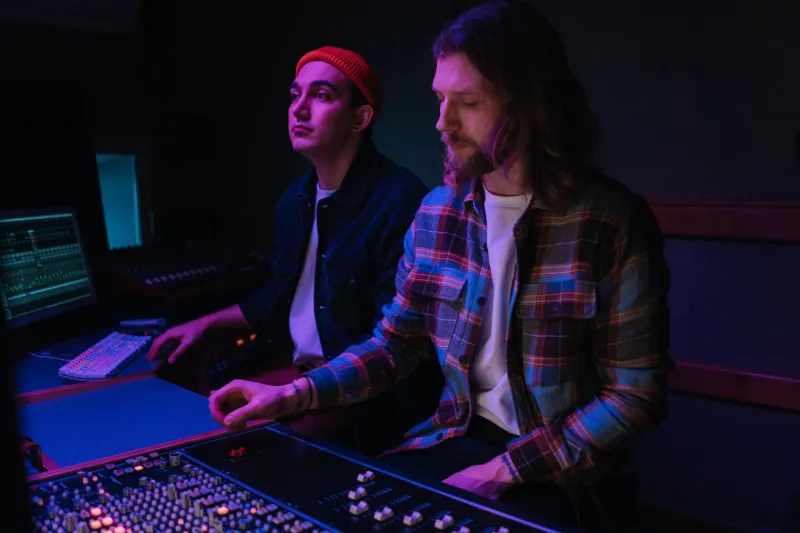
Walk into any serious recording studio in Nashville on a random Tuesday and you might find a country legend cutting a new single in Studio A, an Atlanta rapper laying down vocals in Studio B, and a bedroom-pop artist from Portland getting her debut album mixed by an engineer who's worked with everyone from Dolly Parton to Beyoncé. That's not a hypothetical. That's Tuesday.
Nashville has spent decades building one of the most sophisticated music production ecosystems on the planet—and for a long time, that infrastructure was almost exclusively in service of country music. But something shifted. The session musicians got restless. The engineers got curious. The studios got competitive. And artists from outside the country world started quietly noticing that Music City had something LA and New York couldn't quite match: a deep bench of world-class talent operating at a fraction of the cost, in a city that actually wants you to make great records.
The Infrastructure Was Always the Point
People tend to focus on the songs when they talk about Nashville's legacy. But the real secret weapon has always been the machinery behind those songs. The city is home to hundreds of professional session musicians—many of them multi-instrumentalists who can shift between genres the way the rest of us change playlists. The so-called "Nashville Number System," a shorthand notation method that lets musicians learn and perform songs on the fly, means session players here can adapt to almost any style with startling efficiency.
That flexibility didn't go unnoticed. Producers working in hip-hop and R&B started realizing that Nashville's string arrangers, horn sections, and rhythm players could bring a warmth and organic texture to their records that was increasingly hard to find—or afford—in bigger markets. Word spread the way word always spreads in music: quietly, through the network, one great session at a time.
"People assume Nashville musicians only know one thing," says one veteran session guitarist who has played on records spanning country, soul, and contemporary R&B. "But most of us grew up listening to everything. We just happened to be in a city where country paid the bills. That doesn't mean it's all we know how to do."
The Cost Equation Nobody Talks About Enough
Let's be honest about something: making records in Los Angeles or New York is brutally expensive. Studio rates, housing costs for out-of-town artists, the general overhead of operating in a Tier 1 city—it all adds up fast. Nashville, even as it's gotten pricier in recent years, still offers a compelling value proposition for artists who want top-tier results without burning through their entire advance before the album is finished.
That cost advantage has attracted everyone from independent artists bootstrapping their first full-length to major-label acts whose labels are quietly routing them through Tennessee to stretch budgets. Some of the city's most storied studios—places with decades of hits on their walls and gear that other cities can only dream about—are actively courting non-country clients, updating their marketing and opening their doors to a broader creative community.
The result is a recording economy that's genuinely pluralistic in a way it's never been before. R&B vocalists are working with bluegrass-trained producers. Indie rock bands are discovering that Nashville's rhythm sections hit differently than anything they've recorded with on the coasts. Electronic artists are sampling live sessions with string quartets who happen to have twenty years of studio experience between them.
Artists Are Voting With Their Booking Calendars
You can track the shift in Nashville's recording culture just by looking at who's showing up. In the past few years, the city has quietly become a destination for artists whose music has nothing to do with country—and in many cases, whose audiences would never associate Nashville with their favorite records.
Some of those records are already on the charts. Others are in the pipeline. The artists themselves often don't advertise where they recorded, which is part of why the shift has happened under the radar. But engineers and producers talk, and the consensus is consistent: the volume of non-country sessions in Nashville has grown significantly, and the quality of what's coming out of those sessions is turning heads.
"We've had weeks where every single session in this building was a different genre," says one studio manager at a facility that's been operating in Nashville for over thirty years. "It used to be unusual. Now it's just the week."
Nashville vs. The Coasts: A Different Kind of Competition
This isn't about Nashville replacing LA or New York. Those cities have their own ecosystems, their own energy, their own reasons why certain artists will always gravitate there. But Nashville is increasingly positioned as a genuine alternative rather than a consolation prize—a place where serious artists can do serious work in a city that's built its entire identity around the craft of making music.
There's also a cultural dimension to this that's worth acknowledging. Nashville's creative community has a collaborative ethos that's genuinely different from the transactional intensity of the major coastal markets. Co-writing culture, the tradition of musicians helping musicians, the general sense that the city's success depends on everyone's success—these aren't just talking points. They're structural features of how Nashville operates, and they make it an attractive place to work for artists who've burned out on the competitive isolation of bigger scenes.
What This Means for Music City's Identity
For some longtime Nashvillians, the genre diversification of the city's studios is a complicated thing to sit with. There's a real pride in the country music legacy here, and a legitimate concern that what made Nashville special could get diluted as the city becomes more of a general-purpose recording hub.
But the more interesting argument—and the one you hear increasingly from artists and producers who've been here a long time—is that Nashville's identity was never really about one genre. It was about craft. About the pursuit of the perfect song, the perfect take, the perfect arrangement. Country music was the vessel for that pursuit for decades. Now the vessel is expanding.
The soul of what makes Nashville Nashville—the obsessive attention to songwriting, the respect for musicianship, the collaborative spirit that turns strangers into creative partners overnight—that's not going anywhere. It's just showing up on more genres of records than it used to.
And honestly? The music is better for it.