Roots Without Borders: How Nashville-Trained Artists Are Quietly Rewriting American Music From the Outside In
You Can Leave Nashville, But Nashville Doesn't Leave You
There's a moment that happens to almost every artist who relocates after spending serious time in Nashville. They're in a new studio — maybe it's Silver Lake, maybe it's East Atlanta, maybe it's Brooklyn — and the producer or co-writer they're working with stops mid-session and says some version of the same thing: Where did you learn to do that?
"That" might be a melodic hook construction that feels emotionally inevitable. It might be a rhythm guitar approach that locks into a groove in a way that defies easy genre classification. It might just be the way they instinctively reach for a real conversation in the lyrics when everyone else in the room is chasing a trending sound. Whatever it is, it's distinctly Nashville — and it's showing up everywhere.
The story of Music City's cultural export isn't just about the artists who stay and define the sound. Increasingly, it's about the ones who leave and carry that sound somewhere unexpected, cross-pollinating it with hip-hop, indie rock, Afrobeats, and electronic music in ways that no one back on Lower Broadway could have predicted.
The Diaspora Nobody Talks About
Nashville's talent drain is real, and it's been accelerating for years. Rising rents, shifting industry dynamics, and the magnetic pull of coastal music scenes have pushed a growing number of artists and producers toward cities with different creative ecosystems. But calling it a "brain drain" misses the bigger picture.
What's actually happening is closer to a cultural inoculation. These artists arrive in their new cities pre-loaded with a specific set of skills — disciplined songwriting structures, an ear for emotional storytelling, production habits built around human performance rather than pure digital manipulation — and those skills turn out to be weirdly powerful in genres that have never thought of themselves as having anything in common with country or Americana.
Take the world of alternative R&B, which has quietly absorbed a number of Nashville-trained writers and session musicians over the past half-decade. The results aren't country-adjacent R&B — they're something more subtle. Arrangements that breathe differently. Chord movements with a little more harmonic courage. Lyrics that actually say something specific instead of gesturing vaguely at a feeling. Industry insiders in Atlanta and LA have started noticing the pattern even when they can't always name it.
What Nashville Actually Teaches
To understand why the export matters, you have to understand what Nashville actually instills in the artists who come through it — because it's not just twang and pedal steel, no matter what the caricature suggests.
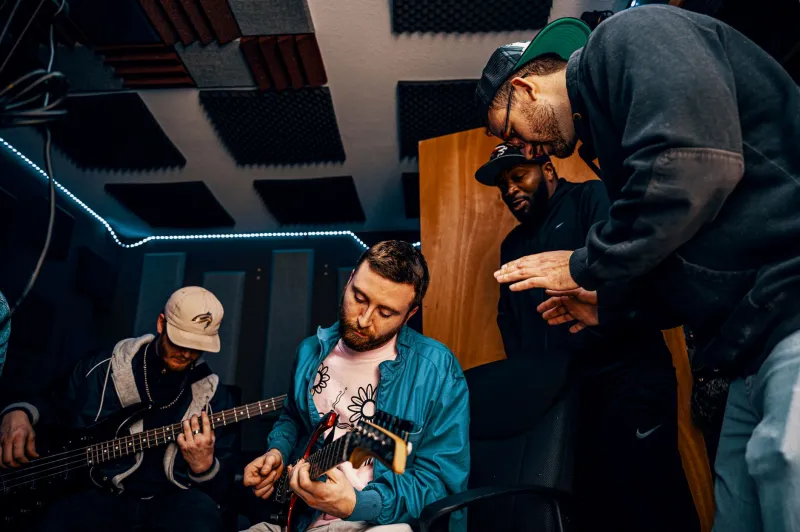
At its core, the Nashville creative model is built around collaboration, efficiency, and emotional specificity. The co-write culture that defines Music Row — where two or three writers come together for a single focused session to build a song from scratch — produces artists who know how to generate ideas fast, kill their darlings ruthlessly, and prioritize the listener's gut response over their own artistic ego. That's a remarkably transferable skill set.
Add to that the session musician culture, which demands versatility, professionalism, and the ability to serve a song rather than showboat over it, and you've got a creative foundation that travels well. An artist who spent three years doing session work in Nashville before heading to Austin isn't just bringing their instrument. They're bringing a whole philosophy about what music is supposed to do.
Stories From the Other Side of the Move
The individual stories are where this gets genuinely fascinating.
Consider the growing number of Nashville-rooted producers who've relocated to Los Angeles and found themselves in high demand for a quality that LA's production scene sometimes struggles to manufacture: warmth. The hyper-polished, sample-driven aesthetic that dominates a lot of West Coast pop can start to feel cold, and producers who learned their craft in Nashville's live-instrument-heavy environment bring something that's hard to fake digitally. They're not making country records in LA — they're making pop and indie records that feel more alive.
Or look at what's been happening in New York's indie-folk and Americana-adjacent underground, where a cluster of artists with Nashville backgrounds have become central figures in a scene that would never describe itself as country-influenced. The connection isn't stylistic — it's structural. These artists know how to build a song that rewards repeated listening, how to write a bridge that actually earns its emotional payoff, how to make a three-minute track feel complete rather than truncated.
In Atlanta, the crossover is even more striking. A handful of Nashville-trained writers and musicians have found their way into the city's hip-hop and trap ecosystem, contributing melodic sensibilities and live instrument textures that add unexpected dimension to productions that might otherwise lean entirely on programmed sounds. The results don't sound like Nashville. They sound like the future.
The Paradox of Influence
Here's the thing that makes this whole phenomenon genuinely interesting from Nashville's perspective: the city gets more influential as it exports more talent. That seems counterintuitive, but it tracks.
Every Nashville-trained artist who makes a splash in another scene becomes an ambassador for a particular creative approach — one that traces back to Music City's unique ecosystem of studios, co-writing rooms, and performance venues. When a producer who cut their teeth on Music Row ends up with credits on a critically acclaimed indie album or a chart-topping R&B track, Nashville's cultural fingerprint extends into territory it never formally claimed.
The city doesn't need its name on the marquee to shape what American music sounds like. It just needs to keep producing artists with the skills and sensibilities that other scenes find irresistible once they encounter them.
What Stays Behind
None of this means Nashville should feel comfortable watching talent walk out the door. The loss is real, and the city's ongoing struggles with affordability and creative space mean the pipeline of emerging artists faces genuine obstacles. Keeping Nashville's creative ecosystem healthy enough to keep producing world-class talent — rather than just serving as a training ground for other cities' scenes — remains an urgent challenge.
But there's something worth celebrating in the diaspora effect, too. Nashville's influence on American music has never been more diffuse, more genre-agnostic, or more genuinely cross-cultural than it is right now. And a lot of that influence is being carried by people who loved this city enough to let it shape them before they went out and shaped everything else.
Wherever they ended up, they took a piece of Music City with them. And it sounds like they're putting it to good use.