Gone But Not Forgotten: How Nashville's Departing Artists Are Spreading Music City's DNA Everywhere Else
There's a certain kind of conversation happening a lot lately in Nashville's coffee shops, green rooms, and parking lots behind rehearsal spaces. It goes something like this: Hey, whatever happened to so-and-so? And the answer, more often than not, is Austin. Or Los Angeles. Or Brooklyn. Or, increasingly, somewhere you wouldn't have expected five years ago.
Nashville is losing artists. Not quietly, and not slowly. The creative class that spent the better part of the 2010s flocking to Music City — drawn by affordable rent, a collaborative studio culture, and a scene that had quietly become the most genre-fluid in the country — is now dispersing. And the question worth asking isn't just why are they leaving, but what exactly are they taking with them.
The Pull Factors Are Real
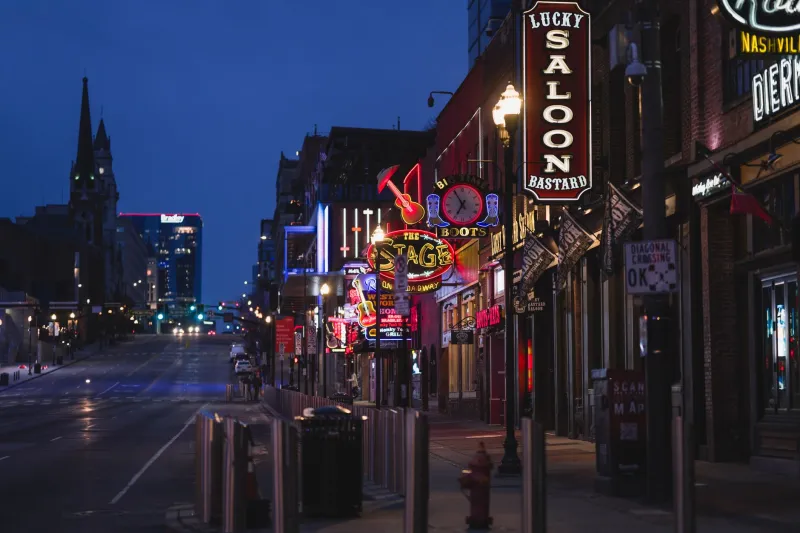
Let's not sugarcoat it. Nashville has a cost problem. The same city that once offered musicians a shot at a real life — a house, a home studio, a community — has watched its median home price nearly double in the past decade. East Nashville, once the scrappy, anything-goes counterweight to the glitter of Broadway, now has brunch spots with hour-long waits and condos where recording studios used to be.
For a session musician making $400 a pop or an independent producer building a client base from scratch, the math just doesn't work the way it used to. Austin, despite its own affordability issues, still carries a reputation as a creative haven. Los Angeles remains the gravitational center of the entertainment industry. And smaller markets — Asheville, Chattanooga, even Kansas City — are quietly positioning themselves as alternatives for artists who want a city that still has room to breathe.
But money isn't the whole story. Several artists who've made the move in the last few years describe something harder to quantify: a sense that Nashville's creative culture has gotten more transactional. That the collaborative, genre-bending spirit that made the city so exciting a decade ago has been partially absorbed into the machinery of commercial success. When everyone's chasing a sync deal or angling for a major label meeting, the experimental edges start to dull.
What They're Building When They Get There
Here's where it gets interesting. The artists leaving Nashville aren't starting over — they're transplanting. And what they're planting, in studios and living rooms and makeshift control booths from East Austin to East Hollywood, is a distinctly Nashville way of working.
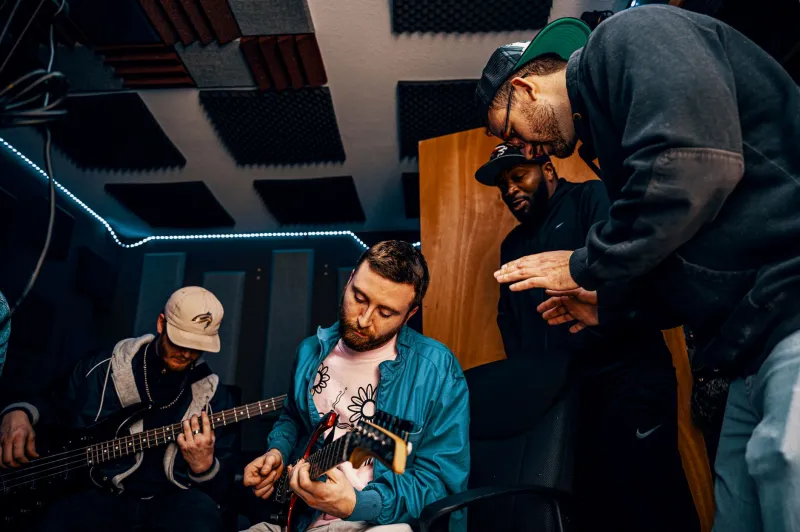
That methodology is harder to define than it sounds, but the people who've lived it know it when they see it. It's the instinct to track live whenever possible. It's a reverence for the song above all else — an almost old-fashioned belief that if the writing isn't there, no amount of production wizardry will save it. It's a collaborative etiquette built on years of session culture, where ego gets checked at the door because there's another date on the books in two hours. And it's a fluency across genres — country, gospel, R&B, rock, bluegrass — that gives Nashville-trained players an almost unfair versatility.
Producers who cut their teeth on Music Row are showing up in LA rooms and quietly raising the bar. Engineers who spent years working in Nashville's world-class (and surprisingly affordable) studio ecosystem are bringing that technical precision to markets that didn't always prioritize it. And songwriters — Nashville's most famous export long before any of this started — are bringing their craft discipline to cities that are only now learning to value it.
A Brain Drain or a Broadcast Tower?
The pessimistic read on all of this is straightforward: Nashville is failing to retain its creative class, and that's a problem with long-term consequences for the city's cultural identity. If the most innovative artists keep leaving, what's left? A theme park version of Music City, all neon and bachelorette parties, with the actual music happening somewhere else.
That concern is legitimate. It's the same anxiety that's haunted cities like Detroit, New Orleans, and Seattle at various points in their cultural histories — the fear that success becomes a kind of self-erasure, that the thing that made a place special gets priced and polished out of existence.
But there's another way to look at it, and it's one that some of Nashville's most thoughtful cultural observers are starting to articulate. What if the diaspora isn't a failure of retention but a feature of influence? What if Nashville's greatest export has never been a sound but a system — a way of making music, of valuing craft, of building community around creativity — and that system is now going global?
Think about it like this: the cities and scenes being shaped by Nashville-trained talent aren't becoming Nashville. They're becoming something new, something that carries Nashville's fingerprints but grows in a different soil. That's not dilution. That's evolution. And historically, that's how musical influence actually spreads.
The Artists Who Stay (And Why It Matters)
None of this lets Nashville off the hook, of course. For every artist who leaves and thrives, there are others who wanted to stay and couldn't. And the city's long-term health as a creative ecosystem depends on its ability to keep some of that energy circulating locally — to ensure that the next generation of Nashville-trained talent actually has a Nashville to train in.
There are people working on this. Organizations advocating for affordable artist housing. Independent venues holding the line against development pressure. Labels and studios actively investing in emerging local talent rather than just importing it. The question is whether those efforts can keep pace with the economic forces working against them.
The artists who stay, and the ones who leave and maintain their Nashville connections, often describe the city with a kind of complicated love — frustrated by what it's becoming, but unwilling to fully let go of what it was. That tension, honestly, feels very Nashville. A place that has always been in the middle of negotiating between its past and its future, between tradition and reinvention, between holding on and letting go.
The Bigger Picture
Maybe the Nashville diaspora is both things at once: a real loss and a real contribution. A sign that the city needs to do better by its creative community, and proof that what that community built here was worth spreading in the first place.
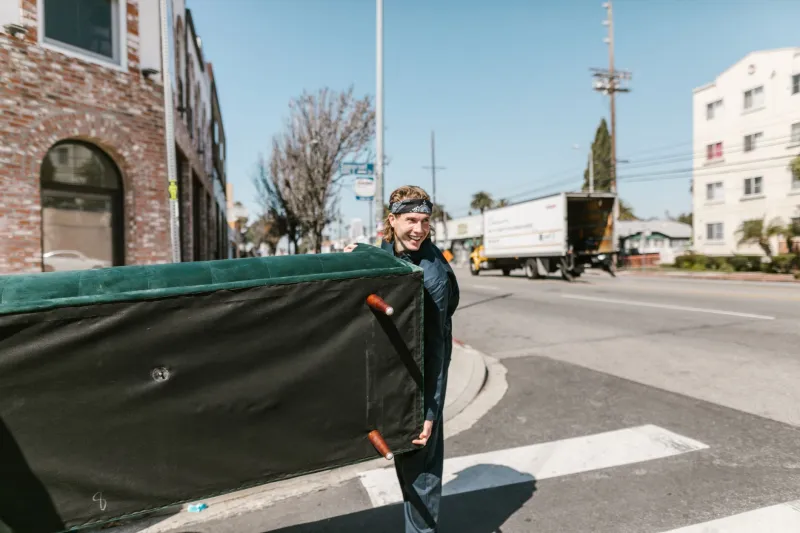
The artists who left took something with them. But they also left something behind — in the rooms they recorded in, the collaborators they worked with, the musicians they influenced before they packed up the van. Nashville has a way of getting into people, and it has a way of getting out into the world through them.
That's not nothing. In fact, for a city that's always been more about the music than the geography, it might be exactly the point.