Earn Your Ears: How Nashville's Mentorship Underground Is Minting the Next Generation of Real Artists
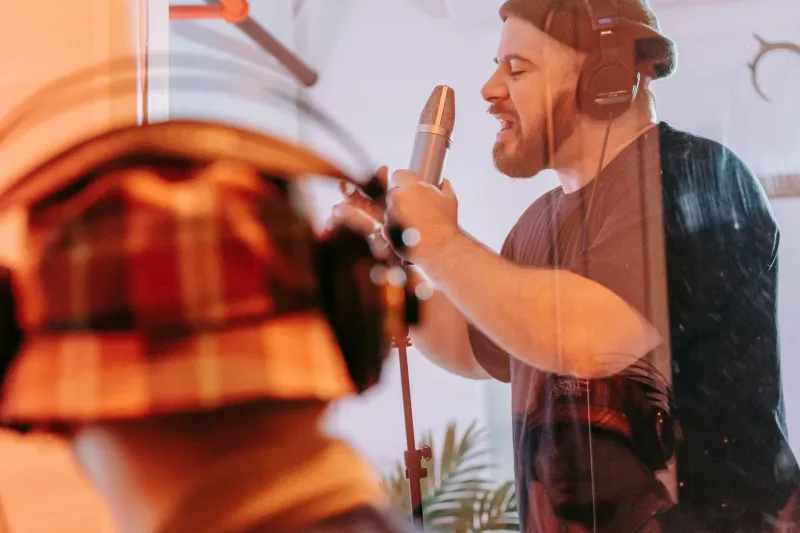
There's a moment that keeps coming up when you talk to young musicians who've made the move to Nashville. Not the moment they signed a deal or landed a sync placement — the moment somebody who actually knew what they were doing sat down next to them and said, let me show you something. That moment, more than any contract or streaming milestone, tends to be the one that changed everything.
Nashville has always had a thing for passing knowledge down. It's baked into the culture here in a way that doesn't really exist in the same form anywhere else in the American music ecosystem. But what's happening right now feels different — bigger, more intentional, and increasingly visible to artists who used to default to Los Angeles as the obvious place to go get serious about a music career.
Why LA Stopped Being the Answer
For decades, the logic was simple: if you wanted to make it in music, you eventually had to make it to LA. The labels were there, the producers were there, the industry machinery was there. Nashville was where country artists went. Everyone else pointed west.
That calculus has shifted pretty dramatically. Artists who've spent time in both cities talk about the difference in almost visceral terms. Los Angeles, for all its creative energy, operates on a transactional frequency. Meetings happen, connections get made, but the underlying current is always what can this do for me right now. Relationships are real, but they're also fungible. The city moves fast and has little patience for the slow work of actually developing an artist from the inside out.
Nashville moves differently. It always has. The co-writing culture here — that tradition of sitting in a room with a stranger and building something honest together — created a muscle memory for collaboration and generosity that the industry never fully commodified. That muscle memory is now powering something that looks a lot less like networking and a lot more like apprenticeship.
The Kitchen Table Model
Call it the kitchen table model. Across the city — in Germantown, East Nashville, Wedgewood-Houston, and out in the quieter neighborhoods where the rent still makes sense — established producers and musicians are folding young artists into their actual working lives. Not as interns. Not as assistants fetching coffee. As creative partners in various stages of formation.
The structure is loose by design. A producer with twenty years and a wall of gold records might spend three afternoons a week with a twenty-three-year-old singer-songwriter from rural Georgia, not teaching in any formal sense but just working — making music, making mistakes, talking through decisions out loud. The younger artist absorbs not just technique but philosophy. How do you know when a song is finished? How do you hold your ground in a room full of people with opinions? How do you stay creatively honest when the money starts pulling in a different direction?
Those aren't lessons you find in a curriculum. They're lessons that get transmitted through proximity and trust, and Nashville — maybe because of its size, maybe because of its particular cultural DNA — has proven unusually good at creating the conditions where that transmission can happen.
What Makes Nashville Different
Part of it is geography. Nashville is big enough to have real infrastructure — studios, publishers, labels, a genuine industry — but small enough that you keep running into the same people. That compression creates accountability. Your reputation travels fast here. Being the kind of established artist who invests in younger talent genuinely earns you something in this community, and being the kind who doesn't notice.
Part of it is the city's deep relationship with craft. Nashville has always taken songwriting seriously as a discipline, not just an expression. That craft orientation creates a natural mentorship instinct — if you believe that what you know can be taught, you're more likely to teach it.
And part of it, honestly, is the way the industry has fractured. With the old label development model largely dismantled, somebody has to do the work of actually building artists. In Nashville, that work has organically migrated into these informal networks, these person-to-person relationships that don't show up on any organizational chart but are quietly responsible for some of the most interesting music coming out of the city right now.
Not Just Country Anymore
It's worth being clear: this isn't a country music story, or at least it's not only that. The mentorship culture that's drawing artists to Nashville right now spans genres in a way that would have seemed unlikely even ten years ago. R&B producers are here. Electronic artists are here. Folk artists, hip-hop beatmakers, singer-songwriters who resist every category — they're all finding their way into these informal networks and discovering that the wisdom on offer crosses genre lines pretty cleanly.
The fundamentals of making something honest, building a sound that's actually yours, navigating the business without losing the thread of why you started — those things don't care what genre you're working in. And Nashville, at its best, has always understood that.
The Long Game
What the city is quietly exporting through all of this isn't just finished records or polished artists ready for their press cycles. It's something harder to quantify and more durable: a way of thinking about music as a long-term practice rather than a short-term hustle. Artists who come through these Nashville apprenticeships tend to talk about their work differently. They're less anxious about the algorithm and more focused on the room. Less concerned with going viral and more invested in building a body of work that actually means something.
That orientation is countercultural in the current moment, which might be exactly why it's resonating. There's a real hunger among young artists for something that feels less disposable, and Nashville — through these deeply human, relationship-driven networks — is offering a compelling alternative model.
The city has always been a place where music gets made seriously. What's new is that more and more artists from outside its traditional orbit are figuring that out, packing up, and heading here not just to record an album but to actually learn something. To find somebody who knows more than they do and sit with them long enough for that knowledge to transfer.
In a music industry that often feels like it's moving too fast to breathe, that might be Nashville's most radical offering: the gift of time, and the people willing to spend it with you.