Drawl Power: How Nashville's Sonic Accent Became the Most Copied Sound in Modern Music
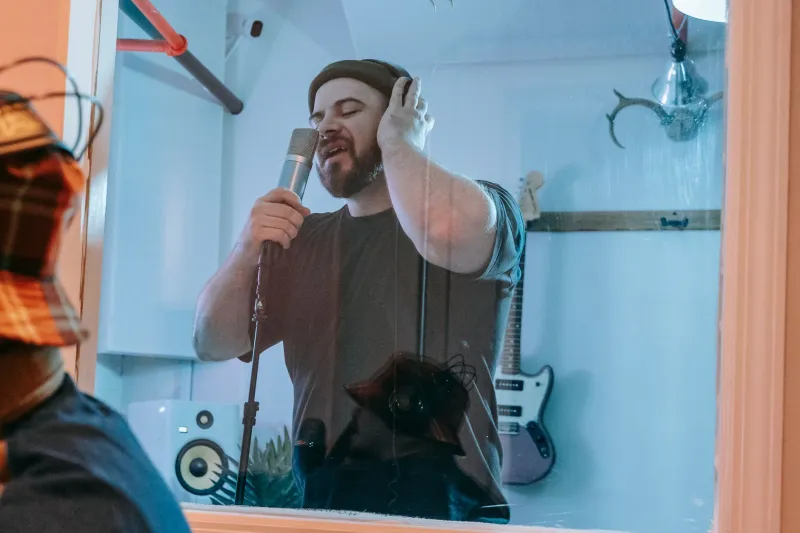
There's a moment in the studio that producers around Nashville describe almost identically, even when they've never met each other. An artist from somewhere else — New York, Los Angeles, sometimes overseas — walks in, hears a local session singer run a line, and stops mid-sentence. Can you do that thing again? The thing they're talking about isn't a chord. It's not a melody. It's a vowel. A specific, unhurried slide through a syllable that sounds like the word itself is taking the scenic route.
Welcome to the Nashville Accent Paradox: a city whose speech patterns have become so sonically distinctive that they've transcended their geographic origins and turned into a full-blown creative tool — one that artists across genres are actively borrowing, studying, and sometimes straight-up stealing.
More Than a Twang
Let's get one thing out of the way: we're not just talking about twang. The Nashville vocal identity is a lot more layered than the caricature suggests. Linguists who study Southern American English point to a cluster of features that make Middle Tennessee speech particularly interesting — vowel shifts, a tendency toward elongated diphthongs, rhythmic pacing that naturally syncopates in ways that align almost eerily well with musical phrasing.
Dr. Patricia Byrd, a sociolinguist who has studied regional American dialects for over two decades, puts it plainly: "What makes Nashville speech stand out isn't just how it sounds in isolation. It's how it interacts with music. The prosody — the natural rise and fall of the voice — maps onto melodic lines in a way that feels intuitive rather than forced. Singers who grew up speaking that way have a built-in advantage in certain styles."
That built-in advantage is something producers in town have quietly exploited for years. But lately, the secret has gotten out.
The Studio as Dialect Lab
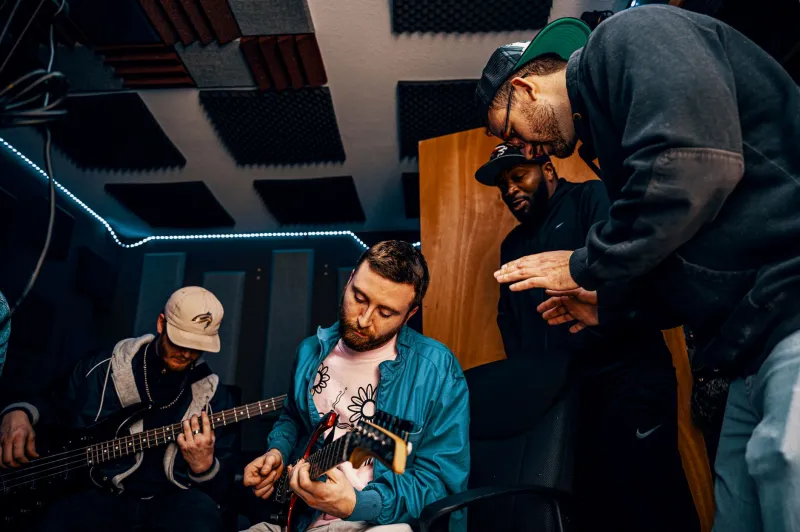
Walk into any major recording session on Music Row or one of the newer East Nashville rooms and you'll find session vocalists who are, essentially, dialect athletes. They can dial the accent up or down depending on what the song needs. A little more of that open ah vowel for a roots-leaning track. A slightly clipped delivery for something more pop-adjacent. The Nashville accent, in skilled hands, is less a fixed identity than a spectrum of sonic choices.
Producer Marcus Webb, who splits his time between a studio near Berry Hill and remote sessions with artists on both coasts, describes it as "a flavoring, like salt." He says, "You don't always want the full Southern thing. But a little of it — the way a word like 'fire' becomes almost two syllables, or the way a phrase lands with that particular weight — that's something people respond to emotionally without knowing why. It feels lived-in. It feels real."
That sense of realness is precisely why non-Southern artists have started chasing it. In an era where listeners have finely tuned authenticity detectors, the Nashville drawl carries a kind of credibility that's hard to manufacture. And yet, manufacture it is exactly what some artists are trying to do.
Borrowed Accents and Borrowed Credibility
It started showing up in hip-hop first, or at least that's where it was easiest to notice. A handful of producers — some based in Nashville, some just heavily influenced by it — began incorporating vocal samples and ad-libs that carried that unmistakable Middle Tennessee cadence. The effect was subtle but deliberate. It grounded tracks that might otherwise float in the cloud of generic trap production.
Then it crept into indie rock. Artists recording in Nashville's increasingly busy independent studio scene started absorbing the accent almost by osmosis. Spend enough time around local musicians, eat enough meals on Gallatin Pike, and something shifts in the way you hold a phrase. Some of them leaned into it. A few have been called out online for sounding "suddenly Southern" after a Nashville recording session, which, depending on your perspective, is either cultural appropriation or just music doing what music has always done.
The debate is real, but it tends to flatten something more interesting. Nashville's vocal identity isn't monolithic. It carries within it the echoes of Black church music, Appalachian folk traditions, Mexican corrido rhythms filtering up from communities in Antioch and Nolensville Road, and the more recent sonic contributions of the city's growing East African and Southeast Asian populations. The "Nashville accent" that everyone wants to borrow is itself already a remix.
When the Voice Becomes the Brand
What's changed in the last five or so years is the degree to which the accent has become a conscious marketing element. Session singers who can authentically deliver that Nashville vocal quality are commanding higher rates. Certain vocal coaches in town now specifically advertise dialect coaching for non-Southern artists looking to "find the pocket" of that regional sound.
And on the artist side, the calculus is simple. In a streaming landscape where listeners skip tracks within seconds, sonic signatures matter more than ever. The Nashville drawl is one of the most immediately recognizable in American music. If you can credibly access even a corner of it, you've got a hook before the hook even starts.
Local artist and songwriter Deja Marcelle, who grew up in Antioch and now records in a home studio off Murfreesboro Pike, has a more complicated relationship with the trend. "I grew up talking this way and it took me years to stop being self-conscious about it in professional settings," she says. "Now I've got artists flying in from Brooklyn wanting to sound like my cousins. It's funny. But I also get it. There's something in this voice that people trust."
That trust is the paradox. The Nashville accent spent decades being condescended to — treated as a marker of provinciality, something to be smoothed out in broadcast media and boardrooms. Now it's a premium sonic asset, something artists pay to get closer to.
The Sound That Keeps Expanding
Maybe the most Nashville thing about all of this is that the city itself can't quite be pinned down on it. Ask ten locals what the Nashville accent sounds like and you'll get ten different answers — because the city has been absorbing new voices for so long that the accent is genuinely evolving in real time. The kids growing up here now, in neighborhoods that sound nothing like the Nashville of thirty years ago, are already developing their own hybrid speech patterns. In another decade, those patterns will be in the studios too.
Which means the thing everyone is currently chasing is already becoming something else. That's both the beauty and the frustration of trying to bottle a place's voice. Nashville keeps moving, keeps absorbing, keeps remixing itself. The accent isn't a fixed point. It's a direction — always slightly ahead of wherever you're trying to catch it.
And somehow, that makes people want it even more.