They Left Music City — Then Music City Called Them Back
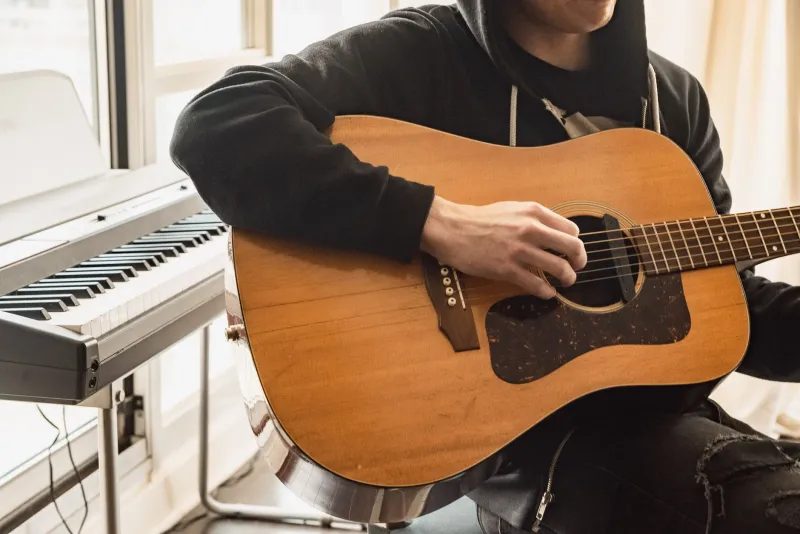
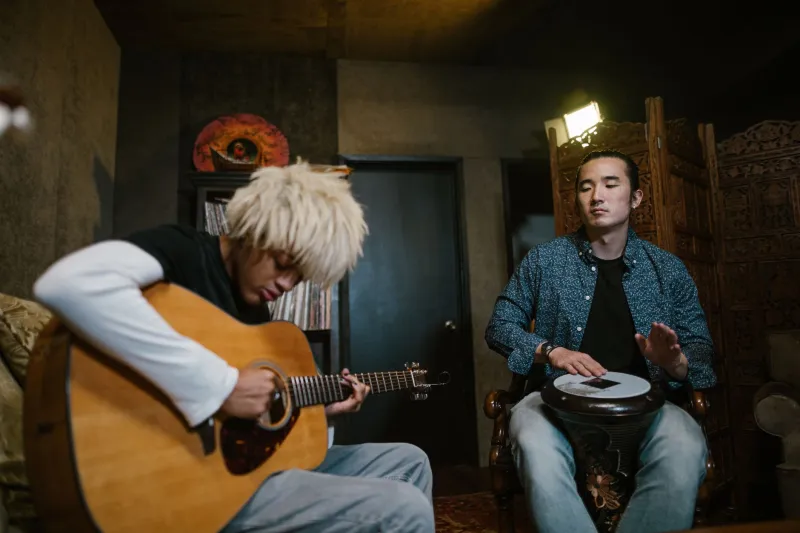
There's a version of the Nashville story that gets told a lot. Artist arrives with a guitar and a dream, grinds it out on Lower Broadway, maybe catches a break — or doesn't — and eventually packs up for Los Angeles, New York, or Austin. It's practically a genre unto itself at this point.
But lately, something else is happening. People are coming back.
Not in droves, not all at once, but steadily — musicians, producers, songwriters, and creative directors who spent years building careers elsewhere are quietly reappearing in East Nashville coffee shops, Germantown studios, and 12South rehearsal spaces. Some are riding out lease expirations in bigger cities. Some are chasing community they couldn't find anywhere else. And some will tell you, straight-faced, that Nashville is simply the best place on earth to make music right now — and they had to leave to figure that out.
The Pull Factor Nobody's Talking About
When people talk about why artists return to their hometowns, the conversation usually defaults to economics. Rent is lower. Family is there. The hustle got old. And sure, all of that applies here. Nashville is still cheaper than Los Angeles — barely, and getting less so every year — but compared to New York or even Austin post-pandemic, it can look like a bargain to someone who's been paying $3,000 a month for a studio apartment with a view of a parking garage.
But the returnees themselves tend to push back on the idea that it's purely financial. Talk to enough of them and a different picture emerges: Nashville, for all its growing pains and gentrification grief, still has something that's genuinely hard to replicate. Infrastructure. Density of talent. A culture where collaboration isn't just encouraged — it's almost unavoidable.
"In LA, everyone's protecting their lane," says one producer who spent four years working out of Silver Lake before moving back to his original base in Madison. "Here, I'll run into three people at Frothy Monkey who want to write something together before I've finished my coffee. The city still has that energy. I forgot about it until I came back."
What They Brought Home
Here's where the story gets genuinely interesting. These aren't the same artists who left. They went somewhere, absorbed something, and now they're back with new perspectives layered on top of deep Nashville roots — and that combination is producing some of the most exciting work the city's underground scene has seen in years.
A singer-songwriter who spent three years in the UK folk circuit returned to Tennessee with a collection of songs that sound unmistakably American but carry a structural complexity you don't typically hear coming out of the standard Music Row pipeline. A hip-hop producer who cut his teeth in Atlanta before a stint in Seoul came back to Nashville and started a label that's fusing trap production with Appalachian instrumentation in ways that shouldn't work but absolutely do.
This is the reverse migration dividend: a city getting back artists who are now fluent in other sonic languages, other industry models, other ways of thinking about what music can be. Nashville seeded them, the world shaped them, and now they're replanting.
The Tension Underneath the Homecoming
It would be easy to frame all of this as a feel-good story, and it mostly is — but it's worth sitting with the complications too.
Nashville is not the city these artists left, in ways that are good and ways that are genuinely hard. The neighborhoods that incubated their early careers have, in many cases, been transformed beyond recognition. Venues that mattered to them are gone. Communities that were tight-knit have been scattered by rising rents and development pressure.
Some returnees describe a kind of double displacement — the grief of leaving, followed by the stranger grief of coming back to something that looks familiar but doesn't quite feel like home anymore. "I came back for the city I remembered," admits one artist who returned after six years in Chicago. "I'm still figuring out my relationship with the city that's actually here."
That tension is real, and it's worth honoring. But it's also, arguably, generative. Artists who've been away tend to see Nashville with fresh eyes — they notice what's been lost, but they also notice what's still here that residents who never left sometimes take for granted. The session culture. The co-writing tradition. The weird, stubborn persistence of people who genuinely believe that songs can change things.
Is Nashville Good Enough to Keep Them?
The honest answer is: it depends on who you ask, and it depends on when.
Some returnees are back for good. They've bought houses, started studios, put down the kind of roots that don't come up easy. Others are treating Nashville as a base camp — a place to recharge, reconnect, and create before the next chapter takes them somewhere else. That's not failure. That's just how creative lives work in 2024.
What's notable is that the city's reputation as a creative hub is strong enough to be part of the calculation at all. When artists who've had real careers in major markets choose Nashville as the place to do their most important work, that means something. It's not nostalgia — or at least, it's not only nostalgia. It's a professional judgment.
"I could be anywhere," says the producer from Madison, matter-of-factly. "I'm here because the work is better here. The collaborations are better. The output is better. That's the whole story."
What the City Does With This
Nashville has an opportunity here, and it would be a shame to waste it. The reverse migration is, in effect, a free infusion of outside influence, worldly experience, and hard-won perspective — exactly the kind of thing cities usually have to work hard to attract.
But it requires the city — its venues, its labels, its media, its neighborhoods — to actually make space for what these returning artists are doing. A lot of it doesn't fit neatly into existing genre boxes or industry structures. Some of it is going to be weird and uncommercial and slow to find its audience. That's fine. That's actually the point.
The artists who left Nashville and came back didn't do it because they ran out of options. They did it because they believe in what this city can be. The least Music City can do is believe in them right back.