After Midnight, the Walls Come Down: Inside Nashville's Secret Jam Session Underground
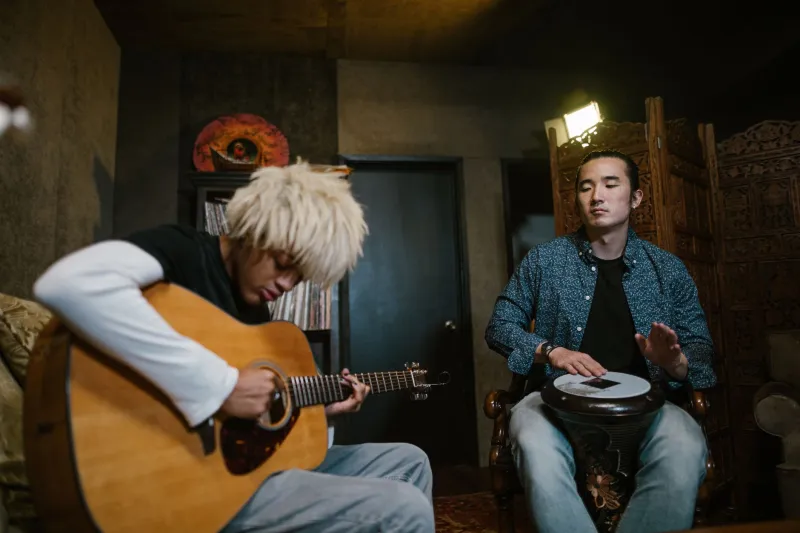
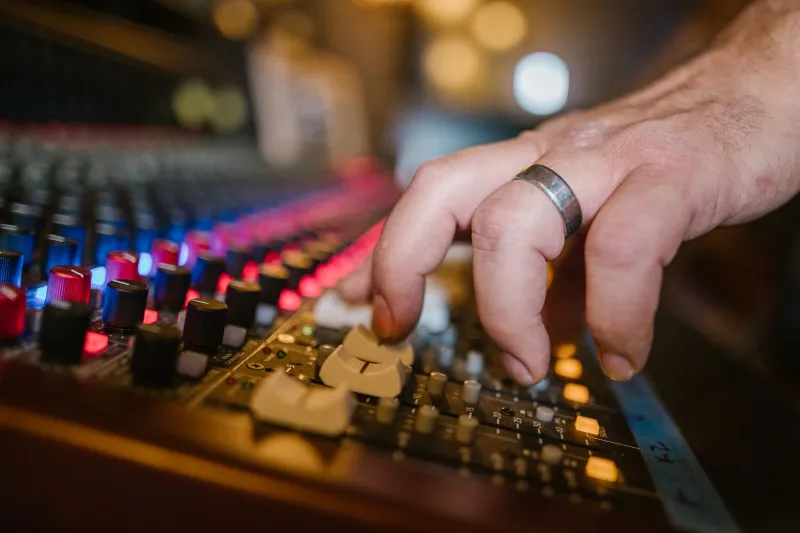
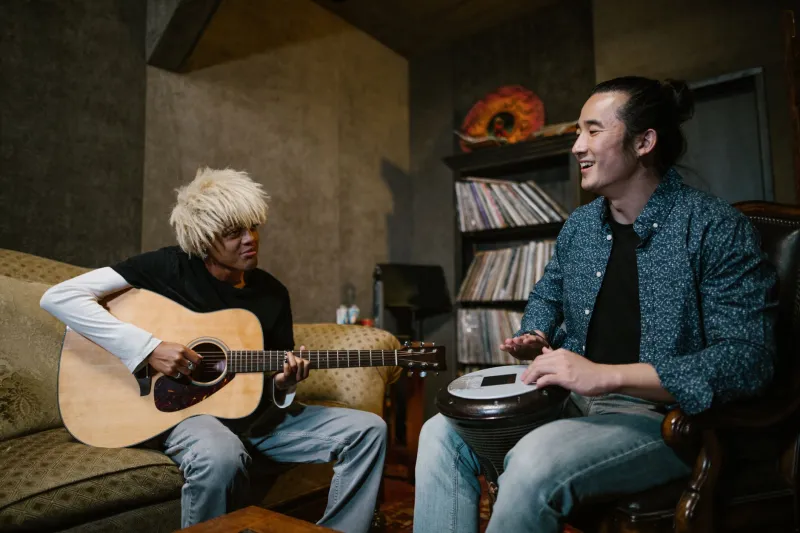
It's 1:17 a.m. on a Wednesday, and a rehearsal space tucked behind a tire shop off Dickerson Pike smells like cold coffee and rosin. A fiddle player who spent her afternoon tracking a major-label country record is trading licks with a producer who built his reputation crafting trap beats for Atlanta-based rappers. Between them, a jazz pianist who moved here from New Orleans three years ago is filling every pocket of silence with something that sounds like it has no business being this good.
Nobody booked this session. Nobody is getting paid. And nobody is entirely sure what genre they're playing.
Welcome to Nashville's most productive secret.
The Accidental Gathering
The informal late-night jam has always been part of Music City's mythology, but something different is happening now. These aren't just pickers swapping standards over cheap beer. The sessions popping up across East Nashville, Wedgewood-Houston, and the overlooked industrial corridors near Riverside Drive are pulling together musicians whose day jobs have nothing to do with each other — and the creative friction is generating sounds that no one planned and nobody can fully explain.
Take Dani Reyes, a fiddle player and session musician who estimates she's played on more than 200 country and Americana records since moving here from West Texas in 2019. A few months back, a mutual friend dragged her to a session in a converted garage in East Nashville where a producer named Marcus Webb was messing around with an 808 drum machine and a borrowed upright bass.
"I walked in thinking I'd stay twenty minutes," she says, laughing. "I left at four in the morning with a voice memo of something that sounded like Dolly Parton remixed by a guy who grew up listening to Outkast. I didn't know what to do with it. I still don't. But I haven't stopped thinking about it."
Marcus, who came up producing hip-hop and R&B in Memphis before relocating to Nashville, says the session surprised him too. "I've been here five years and I spent the first two of them thinking country music and what I do were just separate universes. Then you get in a room at midnight with somebody who can play like Dani and suddenly the rules feel made up. Because they kind of are."
Why Midnight, Why Nashville
There's a reason these collisions are happening here rather than Los Angeles or New York. Nashville's music economy runs on sessions — structured, time-billed, highly professional studio work that fills the daytime hours for hundreds of working musicians. That formality is also its limitation. When the clock is running and a producer is paying studio rates, nobody experiments with the weird idea in the back of their head.
But Nashville is also a city where musicians live close together, socialize together, and share rehearsal infrastructure in ways that bigger cities don't really allow. The community density that makes Music City feel like a small town inside a booming metro is exactly the condition that makes these after-hours collisions possible.
Jeremiah Okafor, a jazz pianist and composer who moved from New Orleans after Hurricane Ida damaged his apartment, has become something of a gravitational force in these circles. He's the guy people call when they want to "try something" — a reputation built entirely through late-night sessions.
"Jazz musicians have always been the connective tissue in American music," he says, stirring coffee at a diner near Five Points after a session ran until nearly 3 a.m. "We're trained to listen and respond. You put me in a room with a country fiddle player and a hip-hop producer, I'm not thinking about genre. I'm thinking about what the music needs next. That's just the training."
Jeremiah has become a recurring presence at sessions that span everything from ambient electronic music to bluegrass-inflected soul. He describes the late-night format as essential to the results. "During the day, everybody's got their professional identity on. At midnight, that stuff falls away. You're just a musician in a room with other musicians."
What's Actually Coming Out of These Rooms
It would be easy to romanticize all of this as pure artistic communion that never leads anywhere. But the evidence suggests these sessions are feeding into real work in ways that aren't always obvious.
Dani Reyes recently released an EP under her own name that includes a track she traces directly back to a late-night session with Marcus Webb. The song layers fiddle over a production that leans heavily on low-end electronic textures — it doesn't fit neatly into any streaming category, which means it's been picked up by playlist curators across folk, electronic, and Americana channels. She's reaching listeners who would never have found her through traditional country channels.
Marcus, meanwhile, has started incorporating live string arrangements into his production work in ways that are getting him calls from artists outside the hip-hop world. "I went into one of these sessions as a hip-hop producer and I came out as something I don't have a word for yet," he says. "Which is honestly the best place to be creatively."
Not every session produces something releasable — and that's kind of the point. The musicians involved are quick to say that the real output isn't always a track. Sometimes it's a technique, a chord voicing, a rhythmic idea that gets carried back into completely different work months later.
The Unspoken Code
There's an etiquette to these sessions that nobody formally teaches but everyone seems to understand. You don't record without asking. You don't show up and immediately pitch a collaboration. You don't talk too much about what you're doing in your "real" career. The sessions work precisely because they exist outside the transactional logic that governs most of Nashville's music business.
"The moment it starts feeling like a networking event, it dies," says Jeremiah. "People can feel that. The magic is in the fact that there's nothing on the line. Nobody's auditioning. Nobody's trying to get something."
Dani agrees. "I've been to sessions where someone walked in with an agenda and within thirty minutes the energy was just gone. These things are fragile. They only work if everyone respects what they are."
The Larger Thing Happening Here
Zoom out and these jam sessions start to look like a symptom of something bigger shifting in Nashville's creative culture. The city has spent decades building its identity around specific genres — country above all, with Americana and Christian music as reliable supporting players. That identity made Nashville rich and famous. It also made it, in certain ways, rigid.
What's happening in these after-midnight rooms represents a quiet renegotiation of what Music City is allowed to be. Musicians from wildly different traditions are discovering that the walls between their worlds are thinner than anyone told them — and that the most interesting territory might be exactly where those worlds overlap.
Nobody's calling it a movement. Nobody's written a manifesto. There's no brand, no booking agency, no press release.
There's just a fiddle player, a beat maker, and a jazz pianist in a garage at 1 a.m., making something that doesn't have a name yet.
That's usually where the best stuff starts.