Concrete Over Culture: The Slow Erasure of the Black Musical Legacy That Built Nashville
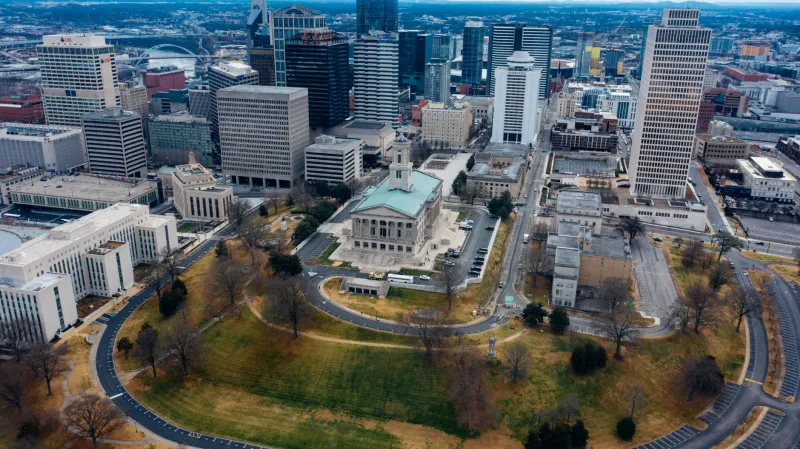
There's a version of Nashville's music history that gets told over and over—the Grand Ole Opry, the Ryman Auditorium, the row of honky-tonks on Lower Broad. It's a real history, and it deserves the recognition it gets. But there's another version of Nashville's music history that doesn't get nearly as much airtime, one that runs parallel and deeper, one that shaped American music in ways that most people never connect back to Tennessee.
That history lives in neighborhoods like Jefferson Street, North Nashville, and Edgehill. It lives in the memories of musicians who played segregated venues in the 1950s and 60s, who built a thriving Black cultural economy out of necessity and turned it into something extraordinary. It lives—or used to live—in the physical fabric of the city itself: the clubs, the churches, the barbershops where songs were born, the rooming houses where touring artists stayed because they weren't welcome anywhere else.
Most of that physical fabric is gone now. And the pace of its disappearance is accelerating.
What Jefferson Street Was
Ask any serious Nashville music historian about Jefferson Street and watch their face change. For roughly three decades, from the late 1940s through the mid-1970s, the stretch of Jefferson Street running through North Nashville was one of the most vibrant Black entertainment corridors in the American South. Clubs like the New Era Club, Club Baron, and the Del Morocco hosted national acts—Jimi Hendrix, Little Richard, Ike and Tina Turner, Ray Charles—alongside local artists who were building careers in a city that largely refused to acknowledge them existed.
The music that moved through those clubs wasn't just entertainment. It was the sound of a community defining itself on its own terms, creating economic infrastructure in the face of systemic exclusion, and producing artists whose influence would eventually reshape popular music worldwide.
The construction of Interstate 40 in the late 1960s cut directly through the heart of the Jefferson Street corridor, displacing thousands of residents and businesses and severing the neighborhood from itself in ways it's never fully recovered from. It wasn't an accident. Urban renewal projects of that era were frequently used as tools of deliberate displacement, and Nashville's highway routing decisions followed a pattern documented in cities across the country.
"That highway didn't just take buildings," says one North Nashville elder who grew up attending shows on Jefferson Street. "It took the whole ecosystem. The people who owned the clubs, the people who lived above the shops, the whole thing. Once that community scattered, it didn't come back together the same way."
The New Wave of Displacement
If the highway was the first wave, the current development boom is the second—and in some ways the more insidious one, because it arrives wearing the language of progress and investment rather than the blunt instrument of eminent domain.
North Nashville, Germantown, Edgehill, and the areas surrounding Fisk University and Tennessee State University have all experienced dramatic demographic shifts in the past fifteen years. Property values that were affordable for working musicians and artists a decade ago have doubled and tripled. Longtime renters have been pushed out by lease non-renewals and rent increases that have no ceiling in a state with limited tenant protections. Homeowners—many of them elderly, many of them sitting on properties that have been in their families for generations—are facing property tax assessments that make staying financially impossible.
The buildings that housed the clubs, the recording studios, the informal gathering spaces where Nashville's Black musical culture thrived—many of them are gone. Some were demolished for condo developments. Others were "renovated" into upscale restaurants or boutique retail that serves the incoming population rather than the community that was there.
What replaces a historic music venue when the developers move in? Usually something with exposed brick and a cocktail menu. The aesthetic of history without any of its substance.
What the Musicians Say
Spend time talking to Nashville's older Black musicians—the ones who've been here long enough to have played the clubs on Jefferson Street, or who remember when the Edgehill community had its own creative economy—and a few themes come up consistently.
First, there's grief. Real, unperformed grief for places and communities that no longer exist in any recognizable form. Second, there's frustration at the selective nature of Nashville's historical memory—the way the city celebrates its music heritage loudly and constantly while allowing the physical and social infrastructure of that heritage to be demolished with barely a press release.
And third, perhaps most pointedly, there's a clear-eyed understanding of the economics at work. "Nobody's going to put up a historic marker for a place if the land is worth more as a parking garage," one veteran R&B musician told us. "That's not cynicism. That's just how it works."
The Preservation Fight
It would be wrong to suggest there's nothing happening on the preservation front. There are organizations, advocates, and community members who are fighting hard to document, protect, and in some cases restore what remains of Nashville's Black musical heritage.
The Jefferson Street Sound museum project has worked to collect oral histories and artifacts from the corridor's golden era. Fisk University's special collections hold materials that document the cultural life of Black Nashville across generations. Community organizations in North Nashville are pushing for historic designation for remaining structures with genuine cultural significance, using the legal tools available—however limited—to slow the pace of demolition.
There are also artists and entrepreneurs who are deliberately choosing to invest in these neighborhoods, opening studios, venues, and creative spaces that serve the existing community rather than the incoming one. It's difficult work, fighting against market forces that are moving in the opposite direction, but it's happening.
The City Nashville Is Becoming
Nashville has a choice in front of it, even if that choice isn't always framed that way. A city can grow and develop while actively preserving the cultural communities that gave it its identity—but that requires deliberate policy decisions, real investment in affordable housing and commercial space for artists and musicians, and a willingness to value cultural heritage in ways that show up in zoning decisions and tax policy, not just tourism marketing.
Right now, Nashville is very good at selling its music history. The question is whether it's willing to protect the living communities that are the continuation of that history—or whether the city's relationship with its own Black musical legacy will be reduced to a museum exhibit and a walking tour while the people who carry that legacy forward are pushed to the margins.
The music that built Nashville didn't come from nowhere. It came from communities, from neighborhoods, from the specific social and cultural conditions of people who made something extraordinary out of what they had. You can't preserve the music without preserving the conditions that made it possible.
And right now, those conditions are being paved over, one development at a time.