Give and Take: How Nashville Is Building a New Playbook for Honest Global Collaboration
There's a version of this story you've heard before. American musicians discover a sound from somewhere far away — Accra, Lagos, São Paulo, Seoul — and bring it home. They smooth off the rough edges, strip out the context, and sell it back to the world with a new label and a bigger marketing budget. The original artists get a vague "inspired by" credit if they're lucky. The money flows one direction.
Nashville has been guilty of that story more than once. But something different is happening here now, and it's worth paying attention to.
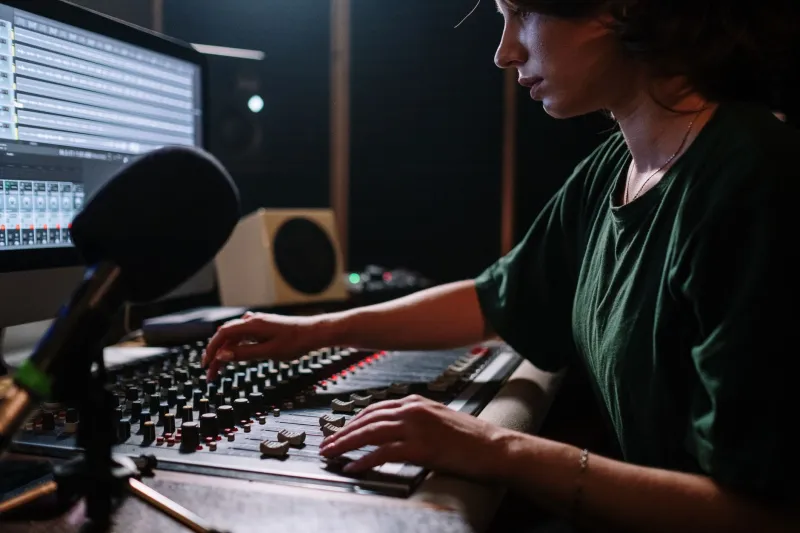
Across home studios in East Nashville, co-writing rooms on Music Row, and late-night sessions in Wedgewood-Houston, a quieter shift is underway. Artists and producers are actively rethinking what it means to reach across cultural lines — not as tastemakers looking for their next aesthetic download, but as collaborators who show up with something to offer and something genuine to learn.
The Difference Between Appreciation and Extraction
Let's be honest about the line, because it matters. Cultural appreciation — the real kind — involves reciprocity. It means crediting your influences, compensating your collaborators, and understanding enough context to know what you're working with. Extraction is the opposite: it takes the sound, drops the story, and cashes the check.
For a long time, the music industry's global ambitions leaned heavily toward extraction. Nashville was no exception. Country's complicated relationship with Black American musical traditions is well-documented. Pop crossovers built on borrowed rhythms rarely sent royalties back to their source.
But the streaming era, for all its problems, has done one useful thing: it made the world smaller in ways that are harder to ignore. When a producer in Nashville can hear a Burna Boy deep cut the same week it drops in Lagos, when a songwriter can DM a Bogotá artist directly and have a session file in their inbox by morning — the old anonymity of appropriation starts to break down. The original artists are right there. They have platforms. They have audiences. They have receipts.
That visibility has changed the math for a lot of Nashville creatives, especially younger ones who came up in a more globally connected industry.
What Reciprocal Looks Like in Practice
So what does ethical collaboration actually look like on the ground in Nashville? It varies, but some patterns are emerging.
Co-writing credits that reflect real contribution — not just a polite gesture, but an accurate accounting of who brought what to the table. Split sheets that get signed before the session ends, not after the song blows up. Publishing deals that include international partners rather than licensing their sounds away. Artists who travel to their collaborators' home countries to record, not just to sightsee, but to understand the sonic environment that shaped the music they're drawn to.
There are producers here who've spent months in West Africa, not to extract a sound but to understand why that sound exists — the instrumentation, the cultural weight behind it, the way it moves through a community. They come back to Nashville changed, and the music they make reflects a deeper kind of engagement than a sample pack ever could.
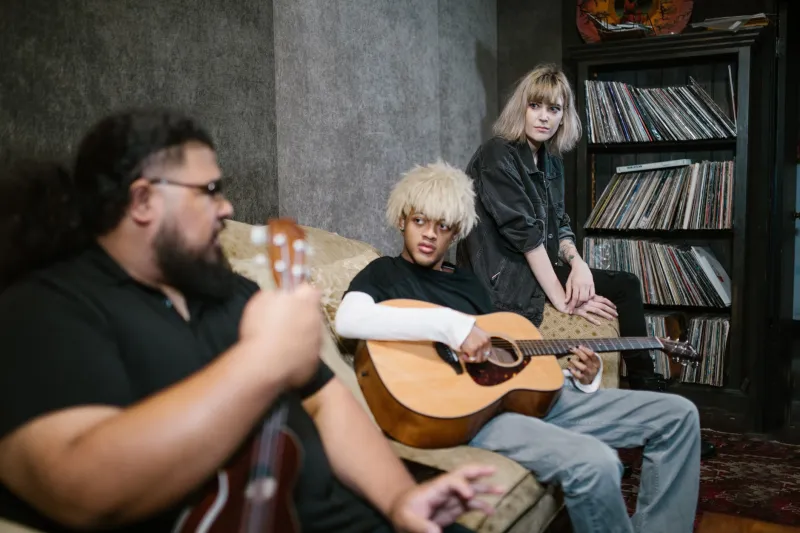
There are also songwriter circles in this city that have started actively recruiting international writers — not as exotic additions to a roster, but as full creative partners whose perspectives reshape the entire room. The songs that come out of those sessions don't sound like Nashville borrowing from somewhere else. They sound like something genuinely new.
The Infrastructure Is Starting to Catch Up
One of the real challenges in ethical global collaboration has always been structural. Even when individual artists want to do the right thing, the industry machinery around them — labels, publishers, licensing agencies — wasn't built for genuine partnership. It was built for acquisition.
That infrastructure is slowly changing in Nashville. Independent labels are leading the way, largely because they're nimble enough to build deals that don't default to the old extractive model. Some are partnering directly with labels in other countries to co-release music in ways that keep revenue local on both ends. Others are creating joint venture structures that give international artists real equity stakes rather than flat fees.
The legal community here is adapting too. Entertainment lawyers who work with internationally collaborative projects are developing contract language that accounts for cultural contribution in ways that standard music industry boilerplate never did. It's unglamorous work, but it's the kind of infrastructure that makes genuine equity possible at scale.
Why Nashville, Why Now
You might ask why Nashville — historically not a city known for its cosmopolitan instincts — is becoming a place where this conversation is happening in earnest. Part of it is the city's own evolution. The influx of international artists and producers over the last decade has changed the demographic and creative texture of the scene in ways that make old assumptions harder to sustain.
Part of it is generational. The artists and producers who are driving this shift in Nashville didn't grow up in a world where American music was automatically the center of gravity. They grew up on the internet. They heard everything, from everywhere, all at once. They don't have the same reflexive assumption of cultural hierarchy that shaped earlier generations of Music Row thinking.
And part of it, honestly, is that the world has gotten better at calling out the alternative. Social media has given artists in Nigeria, Brazil, Colombia, and South Korea a direct line to audiences everywhere — and a direct line to accountability when their work gets lifted without credit. Nashville artists who want to build lasting international careers can't afford the reputational damage of getting that wrong.
The Model Worth Watching
What's emerging here isn't a formal movement with a manifesto. It's more like a set of working principles that serious collaborators are arriving at independently and then recognizing in each other. Show up as a learner, not a curator. Credit everything. Compensate fairly. Build relationships before you build records. Let the collaboration change you, not just your sound.
Nashville has always been a city that understood the value of a good song over a good image. That instinct — the willingness to sit in a room with someone completely different from you and figure out what you have in common — is exactly the instinct that genuine cultural exchange requires.
The city that built its identity on storytelling might just be the right place to figure out how to tell the world's stories together, without stealing anyone's lines.