When the World Moved to Music City: How International Artists Are Rewriting Nashville's Sonic Story
There's a moment, usually somewhere around dusk on Lower Broadway, when you catch it — a steel guitar bending into a melody that doesn't quite belong to any one country, any one tradition. It hovers there, familiar and foreign at the same time, like a word on the tip of your tongue. That feeling? That's the new Nashville.
Over the past decade, something quietly seismic has been happening in Music City. Musicians from Lagos, Seoul, São Paulo, Dublin, and beyond have been packing up their instruments and their influences, trading their home stages for a shot at the global crossroads that Nashville has quietly become. And the locals have been listening — then collaborating, then completely reimagining what Tennessee music can sound like.
More Than a Country Town
Let's be honest: Nashville's reputation still runs on twang and boots and heartbreak songs about pickup trucks. That's not a criticism — that's a legacy. But the city has always been more musically complex than its postcard image suggests. Jazz, blues, gospel, and rock have all had serious roots here. What's different now is the sheer geographic breadth of the influences rolling into town.
According to the Nashville Area Chamber of Commerce, the metro area has seen a significant uptick in residents born outside the United States over the past fifteen years, with particularly strong growth from Latin American, East African, and South and Southeast Asian communities. Where people go, their music follows. And in a city wired for collaboration, that music doesn't stay in its lane for long.
"Nashville is set up for this," says Kwame Asante, a Ghanaian-born guitarist who relocated from London to East Nashville six years ago. "The infrastructure here — the session musicians, the recording studios, the songwriter culture — it's unlike anything in the world. When I brought my highlife rhythms into that environment, people didn't look at me like I was crazy. They pulled out their fiddles and said, 'Okay, what if we try this?'"
The result of that particular 'what if' is a record that sounds like the Georgia coast filtered through West African percussion and Appalachian string work. It shouldn't work on paper. In practice, it stops you cold.
The Songwriter Rooms Are Getting Crowded — In the Best Way
One of Nashville's most sacred institutions is the songwriter round — intimate, acoustic, raw. Venues like the Bluebird Cafe and 3rd and Lindsley have hosted these gatherings for decades, and it's in spaces like these that the new cross-cultural pollination is happening most organically.
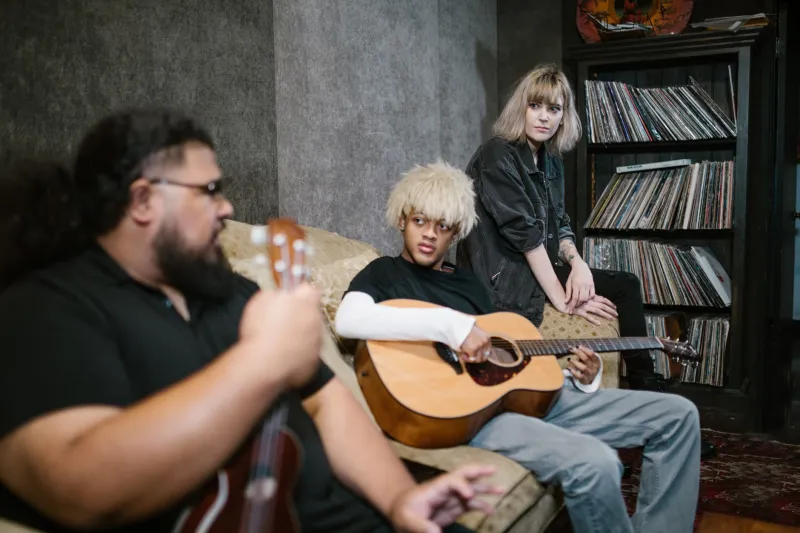
Mariana Fontes, a Brazilian singer-songwriter who moved to Nashville after a stint in Austin, describes her first songwriter round in the Gulch neighborhood as a turning point. "I played a song I'd written in Portuguese, with a bossa nova structure, and the guy next to me — this guy from Gallatin who'd never left Tennessee — started playing along on his dobro. We didn't plan it. It just happened. That's Nashville."
Fontes has since co-written with several established country artists, and her influence is showing up in unexpected places: a bridge that shifts into samba time, a chorus with a Portuguese phrase tucked inside the hook. It's subtle, but it's there, and audiences are responding.
East Nashville: The Unofficial Embassy District
If you want to find where this cultural collision is most concentrated, point your GPS toward East Nashville. The neighborhood has long been the city's artistic pressure valve — the place where the weird, the experimental, and the genuinely new get to breathe. These days, it functions something like an unofficial embassy district for the world's musical diaspora.
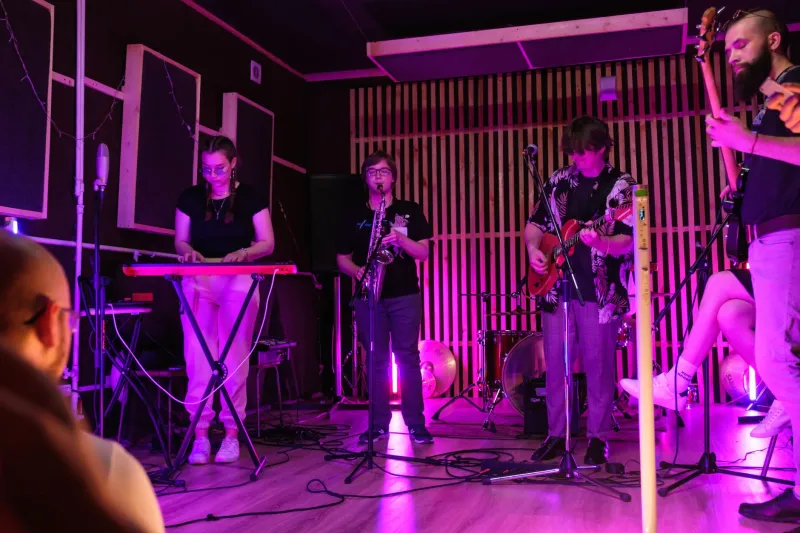
On any given weekend, you might catch a Nigerian-American producer running a session in a converted bungalow studio, or stumble onto a backyard gathering where a Korean-born fiddler is trading licks with a third-generation bluegrass player from Harlan County. The cross-pollination isn't curated or programmed. It's just what happens when creative people from different corners of the planet end up in the same zip code.
Jin-ho Park, a Seoul native who studied classical violin before falling hard for American roots music, has become something of a connector figure in this scene. "I came here to learn country music, and I did," he laughs. "But what I found was that people were just as curious about what I brought. My phrasing, my approach to melody — it was different, and different is interesting in a town full of people chasing the same radio sound."
Park's current project blends Korean folk pentatonic scales with classic honky-tonk structure. The demos circulating in the East Nashville community have generated genuine buzz, with at least two major label A&R reps reportedly paying close attention.
What This Means for Nashville's Identity
There's an ongoing conversation in Music City about authenticity — about what Nashville music is supposed to sound like and who gets to define it. Some traditionalists worry that the influx of outside influences dilutes something essential. Others argue, persuasively, that American music has always been a story of collision and recombination, and that Nashville is simply doing what it's always done: absorbing everything around it and turning it into something worth listening to.
The truth probably lives somewhere in the middle, but here's what's undeniable: the sounds coming out of Nashville right now are genuinely exciting in a way they haven't been in years. When a Congolese-born bassist sits down with a songwriter from Cookeville and they find a groove together, something new enters the world. That's not a threat to tradition. That's tradition doing its job.
Nashville has always been a place where people come to chase a sound they can hear in their heads but haven't quite found yet. The difference now is that those people are coming from everywhere — and they're finding it here, together, in the most Music City way possible.
Where to Find It
Want to catch this fusion energy live? Keep an eye on East Nashville venue The East Room, which regularly programs genre-crossing showcases. Mercy Lounge has been booking increasingly eclectic bills, and the American Songwriter live events series has started featuring international artists with Nashville co-writers. Follow local music blogs and the Nashville Scene's listings closely — this scene moves fast and often announces shows with less than a week's notice.
The world has moved to Music City. The least we can do is show up and listen.